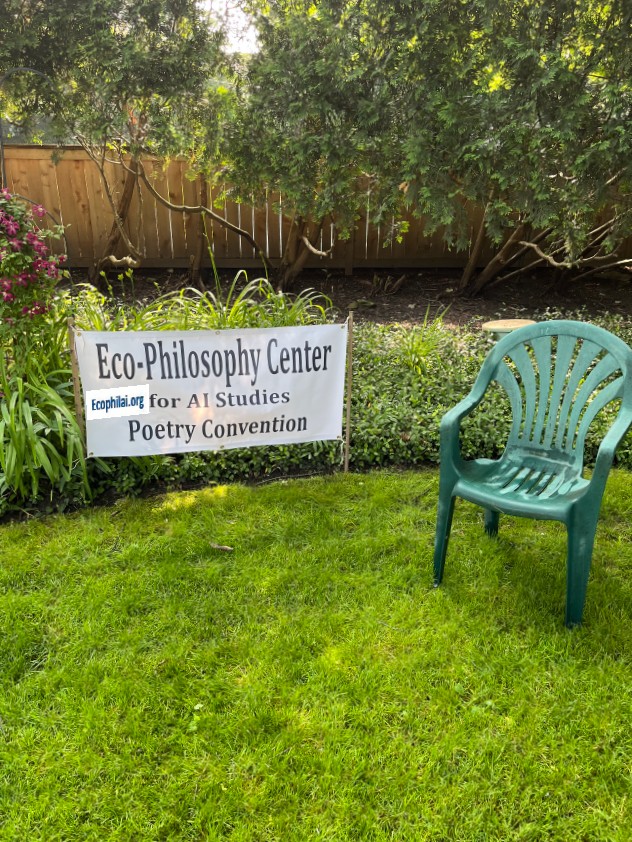
Eco-Philosophy Center for AI Studies
ecophilai.org
The Eco-Philosophy Center for AI Studies (“ecophilai center”) is a non-profit in a very organic sense.
The ecophilai center does not presently seek or accept donations and is not organized as a 501c3 corporation, and exists merely as an unincorporated association. The center is still in a developmental stage, including this inaugural albeit somewhat primitive website. Notwithstanding, despite being in its infancy, the ecophilai center has been described in published literature as “prominent” and “emerging”.
Whatever happened to the pursuit of Happiness?
Connect with nature to enjoy life’s mysteries
and find compassion and happiness with poetry
The Eco-Philosophy Center for AI Studies is based on the teachings of the late Henryk Skolimowski who promulgated the concept of what he called Eco-Philosophy and the World as Sanctuary in the 1970s.
The ecophilai center was formed in the summer of 2026. The founder of the ecophilai center studied with Professor Skolimowski while an undergraduate at the University of Michigan, College of Engineering, in the 1980s, and subsequently received a law degree at the University of San Diego. It should be noted that this is “my version” of eco-philosophy and there may be some differences. Rather, it’s my small vision of a fraction of Henryk Skolimowski’s monumental work. No matter.
It is my contention that we are all philosophers and poets. Maybe not all good ones. But we should all try. Some of the world’s most influential leaders have been poets, including Julius Caesar, Marcus Aurelius, Queen Elizabeth I and Abraham Lincoln. Some of their works still survive. [links to such poetry will be added in the future]
The Eco-Philosophy Center for AI Studies encourages a Socratic humanistic viewpoint, and promotes discourse on the ever-growing question “What happened to the pursuit of Happiness”?
We are told of the wonders of AI. Some are impressive, including reliable autonomous driving. AI can also needlessly strip away the mystery in life with all AI decisions ultimately founded in binary equations with a finite number of steps (which we call “algorithms”), albeit at extremely faster and faster speeds which can mimic “real” life. But there can never be an unknown answer and consequently no ultimate mystery. A key postulate of the ecophilai center is that some element of mystery is required for happiness. And that a connection with nature always involves some mystery, even if as small as noting variations in temperature. What greater mystery can there be than nature? Take snowflakes for example. From an early age, we are told no two snowflakes are exactly alike. Accordingly, any AI generated snowflake sequence can never be truly authentic as by nature of the algorithm it can only have a finite number, not endlessly different and unique. AI snowflakes can never have true mystery. Always some code writer in its genesis.
The question therefore bluntly is “does AI make us happier?” Or phrased differently, as AI takes over more and more of the daily functions that humans perform, both manual and intellectual, are we happier? AI accordingly should not be allowed to eliminate the mystery in life. The ecophilai center encourages connecting with nature, in addition to physically being in it, through philosophy and poetry. We will be happier. Happier people are more pleasant to be around. Specific to AI designers and implementers, your happiness will be reflected in your work. Happy engineers create products that make the user happier is a basic premise.
The long-term goals for the ecophilai center is to function as a nonprofit educational resource to facilitate the exchange of thoughts and experience in the emerging AI world from an Eco-Philosophical perspective. The ecophilai center hopes to be 1) a conduit for philosophical debate including suggestions for lifestyle practices; and, 2) a forum for engineers and others involved in the design, implementation and use of AI. Eventually, this latter goal may involve onsite learning.
The short-term goal is to encourage “seeking a connection with nature”. Be a philosopher. Be a poet. Get outside in nature and recite your poetry, or poetry written by others. And find mystery, compassion and happiness.
A fundamental precept of my version of Eco-Philiosophy is that we are all philosophers and that we are all poets. Continually asking and seeking to learn is a primary function of any philosophy. Connecting with nature means to be in it and respect it. If you want to hug a tree or sail across a lake, that’s fine. But a simple walk or even opening a window to get some fresh air can be sufficient. And combine it with some poetry. Write your own or read from a book. It has been said that poetry comes from the heart or soul and is the language of the heart or soul.
The five key tenets of Eco-Philosophy are:
1. The world is a sanctuary.
2. Reverence for life is our guiding value.
3. Frugality is a precondition for inner happiness.
4. Spirituality and rationality do not exclude each other, but complement each other.
5. In order to heal the planet, we must heal ourselves.
An inaugural event for the ecopilai center, a Poetry Convention, was recently held. No speeches, lectures and papers presented. Just poetry. The theme was “connecting with nature”. All participants were asked to write or bring a poem to read. Or several. Further Poetry Conventions are planned. Hopefully, remote participation can be arranged such as by zoom to both listen to and contribute any poems.
A life without mystery is a life not worth living has been remarked throughout the millennia. Socrates famously said “A life unexamined is not a life worth living”. Einstein, perhaps the epitome of a 20th century scientist, commented:
The most beautiful thing we can experience is the mysterious.
It is the source of all true art and science. He to whom this
emotion is a stranger, who can no longer pause to wonder and
stand rapt in awe, is as good as dead: his eyes are closed … What
is impenetrable to us really exists, manifesting itself as the
highest wisdom and the most radiant beauty, which our dull
faculties can comprehend only in their most primitive forms.
Quoted in Introduction to Philosophy (G. Patrick and F. Chapman), 1935, p. 44;
cited in The Participatory Mind A New Theory of Knowledge and of The Universe
(Henryk Skolimowski), 2019, p 26
250 years ago in 1776, as part of the American colonies struggle for independence, enduring words were written proclaiming the inalienable right to the pursuit of happiness. Whatever happened to the pursuit of Happiness? is a guiding motto of the ecophilai center. Happiness not as defined in the sense of watching your alma mater win the 2026 Men’s NCAA Basketball Championship, although that doesn’t hurt. Nor happiness as defined by those instant moments of gratification. Like a nice meal. Those are linear moments. Rather, happiness in a more existential sense. Your inner feeling or presence. That part of you that is you. Some describe it as being part of your soul or inner spirit. The part you want to connect with nature.
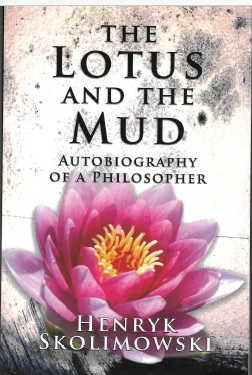
TA brief online article from maaber.org/eighth_issue/deep_ecology_1e.htmthat that Professor Skolimowski previously wrote summarizing eco-philosophy is set forth below. As this website is updated, much more additional information regarding Professor Skolimowski’s teachings and publications will be shared.
What is Eco-philosophy? Some Founding Principles
Henryk Skolimowski
A man’s reach should exceed his grasp, or what’s a heaven for? Browning
Eco-philosophy is “ecological” in the broadest sense: it sees humanity as one with nature, as an integral part of the process of evolution which carries the universe onward from inanimate matter to life, to consciousness, and ultimately to divine.
The central concept of eco-philosophy is “The World as Sanctuary.” This is offered as an alternative to the Newtonian vision of “World as a Machine.” This new worldview emphasizes the unique, precious, and sacred nature of our planet. All other principles of eco-philosophy follow from this one. The five key tenets of eco-philosophy are:
1. The world is a sanctuary.
2. Reverence for life is our guiding value.
3. Frugality is a precondition for inner happiness.
4. Spirituality and rationality do not exclude each other, but complement each other.
5. In order to heal the planet, we must heal ourselves.
Eco-philosophy arose in response to the failings of both the mechanistic worldview and the impotent linguistic/analytic philosophy that came from it. These failings are evident in our violent and selfish attitudes toward fellow humans, and in our widespread abuse of the environment.
Eco-philosophy is philosophy as it should be-meaningful, relevant, and participatory. It is not the stuff of dusty library books, but rather a thoughtful, contemporary approach to understanding the world, and ourselves.
ECOLOGICAL HUMANISM[1]
Oswald Spengler has written that “Technics are the tactics for living.” This is a very useful phrase indeed. I shall take advantage of it while stating our dilemma and while searching for possible solutions.
Modem technology, or better-western technology, has failed us not because it has become economically counter productive in the long run; and not because it has become ecologically devastating, but mainly because it has forgotten its basic function, namely that all technics are, in the last resort, the tactics for living. Because modem technology has failed us as a set of the tactics for living, it has also proved in the process to be economically counter-productive and ecologically ruinous.
But this indictment also affects Alternative Technology. Alternative Technology has started rather vigorously, captured the imagination of many, and is now fizzling out. Why? Because Alternative Technology has not taken itself seriously enough, that is, as a new set of tactics for living.
When pushed to an extreme, Alternative Technology has either become an idolatry of new kinds of gadgets, or else a crass ideology of the New Left: a feverish process perpetuating itself, though perhaps empty of content. Alternative Technology has been waning[2] because it did not go to its roots; it did not confront itself with the ultimate task of all technics: to become a set of tactics for living.
The tactics for living are not merely new uses of old instruments. Culture is a fundamental part of the tactics for living. Thriving and healthy, culture provides a set of dynamic structures for living. Within the western world, particularly during the last 150 years, and especially during the last 50 years, culture (as well as religion) has been systematically misunderstood, mystified, misread and distorted, and taken either to be a sickly product of decadent minds or an anachronism of the pre-technological era. In either case, culture was considered more or less spurious. But culture and religion are an inherent part of the human strategies for survival and well-being.
However, the culture of the post-industrial era cannot be a simple resuscitation of some traditional cultures, for it will have to meet new contingencies of life, which means it will have to rethink the products of the human mind and spirit within a differently conceived world.
I have chosen to call this new set of tactics for living, which encompasses New Technology, New Culture and New Ideology, Ecological Humanism. Ecological Humanism is not a new label for old things, nor simply pouring old wine into new bottles. I must point out, in particular, that Ecological Humanism has little to do with traditional humanisms; and it quite sharply separates itself from Marxist or Socialist humanism, which calls (along with other humanisms) for the appropriation of nature to man.
Traditional humanism has emphasized the nobility of man, the independence of man, indeed the greatness of man who is cut in the Protean mold. This conception of man went hand in hand with the idea of appropriating nature to the ends and needs of man. Marx fully accepted this conception of man and the idea of the appropriation of nature (or simply using nature) to man’s advantage, or, indeed, to man’s content.
Ecological Humanism is based on the reversed premise. It calls for the appropriation of man to nature. We have to see man as a part of a larger scheme of things: of nature and cosmos. We have to transcend and abolish the idea of the Protean (and Faustian) man. The consequences of this reversal are quite far reaching, and I will just touch on some of them. On a more practical level, Ecological Humanism signifies, among other things, frugality, recycling, the reverence for nature, which are really three different aspects of the same thing.
I must emphasize that Ecological Humanism is not just another fancy name for saying that we should be less wasteful, for it signifies a fundamental re-orientation of the multitude of things. Not many people, Marxists in particular, are aware that traditional humanism, as based on the ideal of the Protean man and the idea of the appropriation of nature (with the tacit acceptance of both present science and present technology), are simply incompatible with the ideal of harmony between the human species and the rest of nature.
Now, let me spell out some of the consequences of Ecological Humanism. On the practical level, as I have already mentioned, Ecological Humanism spells out a new kind of technology based on the idea of frugality, recycling, the reverence for nature, new economy; of which the reverence for nature is not a spurious ornament, but an intrinsic part of a new design.
On the level of the individual, Ecological Humanism signifies (that is, after we cease to be consumptive hogs) inner exuberance instead of the restless outward activity; empathy and compassion rather than ruthless competition; understanding in depth rather than merely handling of information.
On the level of the entire culture, Ecological Humanism signifies a fundamental switch from the traditional idiom, in which man asserts himself against things ‘out there’, tries to impress himself on the world, to the idiom, in which man will mesh himself with the things ‘out there’.
It is by now clear to you, I hope, that no New Technology can provide a solution by itself, that no new Culture can provide a solution by itself, that no New Ideology can provide an answer by itself, but that each must become an aspect of a larger paradigm, an aspect, in other words, of a new set of tactics for living.
In the realm of ideology, Ecological Humanism points towards social relationships based on the idea of sharing, and stewardship rather than owning things and fighting continuous ruthless battles in open and camouflaged social wars. In short, Ecological Humanism is based on a new articulation of the world at large:
it sees the world not as a place for pillage and plunder, an arena for gladiators, but as a sanctuary in which we temporarily dwell, and of which we must take the utmost care;
it sees man not as an acquisitor and conquistador, but as a guardian and steward;
it sees knowledge not as an instrument for the domination of nature, but ultimately as techniques for the refinement of the soul;
it sees values not in pecuniary equivalents, but in intrinsic terms as a vehicle which contributes to a deeper understanding of people by people, and a deeper cohesion between people and the rest of creation;
and it sees all these above mentioned elements as a part of the new tactics for living.
THE BENEVOLENT COSMOS[3]
The Cosmos is a benevolent being that came into existence to generate life (Anthropic Principle); and then to bring about human life. Human beings are not an accident in the Cosmos. But a consequence of its nature. Creativity is an essential aspect of the nature of the Cosmos. Why is the Cosmos creative? Because it is on the way to its self-realization. We are a part of the self-realization of the Cosmos.
The Cosmos is physical and trans-physical. It is governed by physical laws and trans-physical laws. Among these trans-physical laws, the laws of creativity and of transcendence are most important.
Some have called them spiritual laws in contrast to the physical laws.
THE COSMIC MAN[4]
Human beings emerged out of the slimy soup of evolution. Then they developed amazing powers of imagination, creativity, art. Through these powers they were able to remake the shapes of the universe and of themselves. They have become co-creative partners of evolution.
We humans are cosmic beings. For what else can we be? We are the rocks and the stars, the leaves and the trees. We incorporate all stages of the evolution of Cosmos in our blood veins and in our brains. Moreover, we are the antennae of the Cosmos. In order to think the Cosmos had to create thinking beings. We are the eyes of the Cosmos, the minds of the Cosmos, the loving arms of the Cosmos’ true participants of the creative feast of the Cosmos.
We should feel comfortable in this Cosmos for it is our home.
THE WORLD IS A SANCTUARY[5]
The time has come to abandon the metaphor which has for so long dominated our perception of the world and to reject the damaging assumption that the world is a clock-like mechanism within which we are little cogs and wheels. It has led us to reduce everything, including human life, to the status of components of this great machine. The consequences have been disastrous. Only when we find a new metaphor and invent a new conception of the world shall we be able to stand up to the senseless, destructive forces that have swept over our lives.
According to one tenet of ecological thought the world is a sanctuary and we should treat it as such. This assumption is the basis of a completely different outlook on the universe and our place within it. If we live in a sanctuary, then we must treat it with reverence and care. We must be the earth’s custodians and shepherds. The idea of stewardship naturally follows from the assumption that the world is a sanctuary.
These are the basic components of what I call the ecological metanoia: simultaneously changing our metaphor of the world, our attitude to it, and our thinking about it. This can and is being done. Of course it is a large and difficult project, and this is why it is progressing slowly, haltingly, some-times grudgingly. For psychological and historical reasons, we are reluctant to change, but deep down, we know that we must do so. This is not the end of the story, however. Other important changes must occur before we arrive at a sane, sustainable and fulfilling world.
This quest for meaning leads us on to the question of the purpose of human life and to those ultimate concerns upon which our humanity is based.
One characteristic of our times is the atrophy of meaning. Both religious people and secularists are aware that there is a desperate search for meaning in modem society. We do not find a meaning in consumption, entertainment and ordinary jobs. We look for a larger purpose and we do not find it. For this larger purpose requires a transcendent dimension to our life.
This is where eschatology comes in. Eschatology is the sphere of human thinking which is concerned with the ultimate ends of human life and thus with the meaning of human life, and with the question of what gives meaning to meaning. Eschatology has traditionally been the discipline which envisages transcendent goals as the purpose of our life. These goals are often, but not always, religious.
Transcendent goals and purposes must not be mistaken for a religious agenda or religious beliefs.
Why do we need a new eschatology? Why do need a new transcendent purpose to give meaning to human life? The answer is that secular eschatology, promising fulfillment here on Earth, in materialist and secular terms alone, has failed dismally. Instead of bringing happiness and fulfillment, it has robbed us of the deeper dimensions of human life. Some secular humanists are aware of this and have attempted to devise a new scheme, whereby a new transcendent purpose is grafted on to secularism. They postulate a task of continual self-improvement in the pursuit of perfectibility and freedom. But these are only words. If perfectibility and self-improvement are to mean anything, they must be rooted in a deeper sense of transcendence which goes beyond secularism.
It is thus time to abandon our linear modes of thinking and an exploitative attitude toward nature in favor of an ecological perspective and a new form of spirituality.
Let us very briefly state some of the main contentions of the new ecological world-view, which are also components of the new eschatology. The universe is on a meaningful journey of self-realization. We are a part of this journey. The universe is not a haphazard heap of matter and we meaninglessly drifting particles in it. The new Astrophysics, the New Physics and the Anthropic Principle all converge to inform us that we live in an intelligent universe, self-actualizing itself. There is a wonderful coherence in this process of continuous self-transcendence. Nowadays this is well supported by science. I am not saying it is “proved” by science, for science cannot prove such things. A leading contemporary physicist, Freeman Dyson, has said: “Looking at all the ‘coincidences’ which have occurred in the evolution of the cosmos, we cannot escape the conclusion that the cosmos behaves as if it had known that we were coming.” A leading American physicist, John Archibald Wheeler, maintains that when we look at the universe, it is the universe itself which is looking at itself, through our eyes and minds. For we live in a curiously participatory universe, and we are profoundly woven in this stupendous participatory process.
We are the eyes through which the universe looks at itself. We are the minds through which the universe contemplates itself. We have an incurable urge to transcend because the will of the universe to continually self-transcend itself is built into us. We are cosmic beings. We share with the entire universe the dimension of transcendence and the urge to self-realization. This has been the basis of all enduring forms of spirituality.
A wonderful journey lies ahead of us as we seek to actualize the cosmic meaning which resides in us, to help the universe and all its creatures in the journey of self-actualization and in the process of healing the earth and making it blossom again.
*** *** ***
[1] At a packed Forum at the Architectural Association (London) on Thursday June 20 (1974), four specialists put forward their views on the subject ‘Beyond Alternative Technology’. Taking part were Edward Goldsmith, editor of The Ecologist, Peter Harper, a frequent contributor to radical and alternative publications, Gerry Foley of the AA Technical Services Unit and Professor Skolimowski of the Humanities Dept, College of Engineering, Ann Arbor, Michigan, whose contribution is reproduced here.
[2l Though the Establishment has just discovered it: see the article in The Observer, 26 May 1974.
[3] January 2001.
[4] February 2001.
[5] This article first appeared in The UNESCO Courier, March 1997.